This is the fourth piece in our series on why campaigns fail to convert. The lead article named honest engagement as a structural fix, not a nice-to-have. This piece makes the full case, and names the version of it that actively backfires.
The multiplier that's easy to underrate
Zeno's research, surveying over 8,000 consumers across eight markets and more than 75 brands, found people are four to six times more likely to buy from, trust, champion and defend a company with genuine purpose behind it. Not slightly more likely. Four to six times. WARC's 2025 consumer engagement research puts a similar figure on the connection itself: 78% of consumers say they feel a deeper connection to brands that communicate their mission and values authentically.
That's a bigger lever than most marketing budgets treat it as. And it's a completely different mechanism to a discount code.
Why a discount and a genuine reward aren't the same tool
A discount gets you a form fill from someone who was never that committed in the first place, and who'll leave for a better discount the moment one appears elsewhere. That's not cynicism, it's just what the research shows: a large majority of consumers say they've switched brands purely because a competitor's incentive was better, and loyalty programmes built purely on points and cashback are seeing engagement decline across the board.
A genuine reward, tied to something a person actually did rather than something they were bribed into, works differently. It self-selects for people who wanted to be there. That first honest exchange builds enough trust that you can layer further incentive at each later stage of the funnel, a bigger reward for booking a meeting, a further unlock for sharing more information, without it feeling like manipulation, because the relationship already has one honest exchange behind it.
The half of this story that gets left out
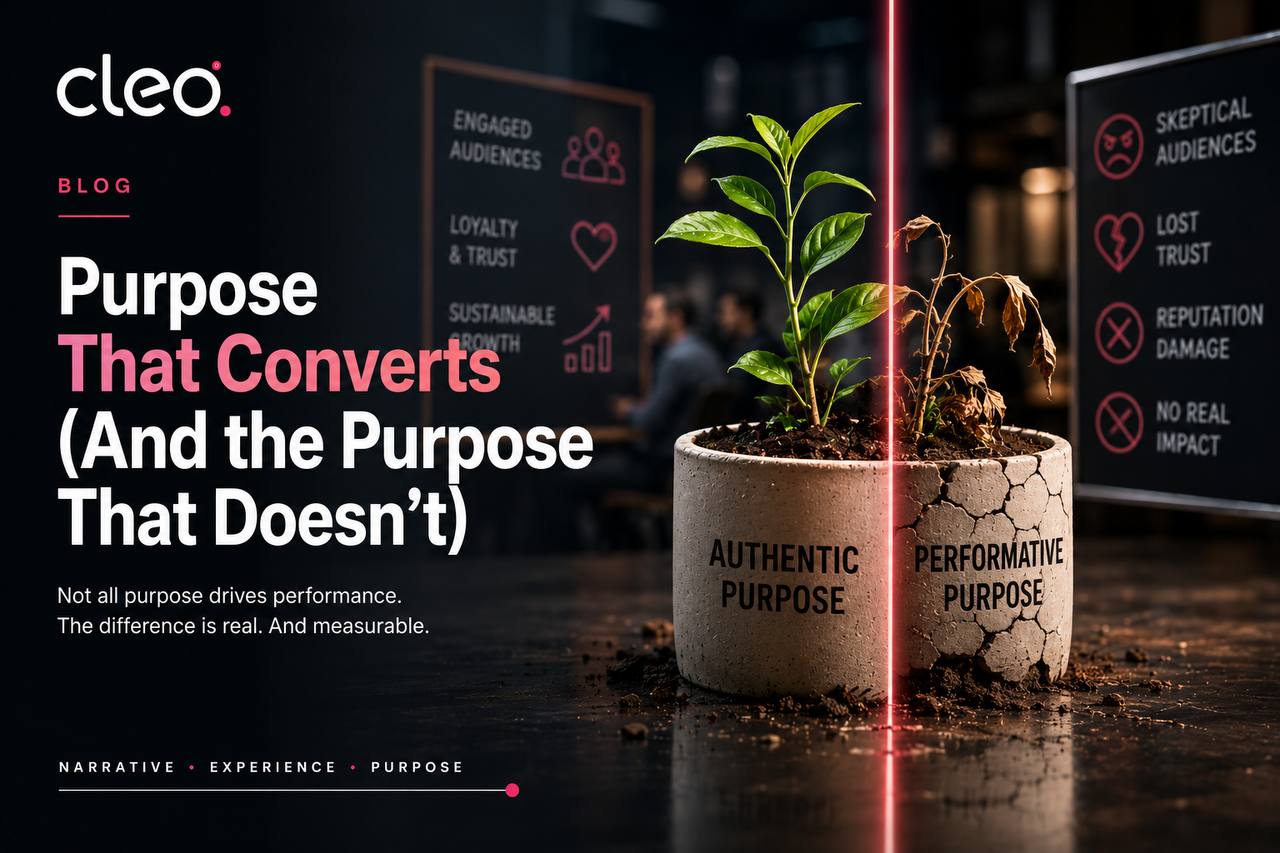
Purpose only works when it's real, and consumers have got very good at telling the difference. Research on what's been called purpose-washing, purpose messaging with nothing genuine behind it, shows it actively erodes trust rather than merely failing to build it. EY-cited research found 88% of consumers feel brand messaging generally doesn't align with what they actually care about. A purpose campaign built on a press release rather than a measurable action is, at best, wasted spend, and at worst, actively damaging.
That's the line we hold. Purpose has to be the mechanic, not the marketing.
What we've built around this
This is the thinking behind Zenko, our purpose engine. Instead of a lead magnet or a discount tripwire designed to extract a form fill before someone's decided whether they actually want what's on offer, Zenko ties the reward to a completed action that funds something real. A verified step someone actually took. A meal. A tree. A tonne of carbon offset. The person isn't tricked into the funnel, they're honestly in it, because the exchange is transparent and the outcome is real.
In our own campaign data, that distinction shows up directly: partners running genuine reward mechanics through Zenko have seen engagement improve by over 200%, alongside a reduction in cost per lead of more than 60% against their prior benchmarks. We treat that as our own figure rather than an independently audited industry statistic, but it lines up with the wider research on authentic value exchange.
Layered on top of Cleo's own client data, purpose-driven campaigns built this way have shown 40% higher engagement, 25% lower cost per lead, and three times higher brand favourability compared to campaigns where purpose was tacked on rather than built in. Again, our own measured figures, presented alongside the external research rather than as a substitute for it.
The test worth applying before you run a purpose campaign
If you removed the purpose element entirely, would the offer still make sense on its own terms. If the answer is no, the purpose is doing the job a discount should be doing, and it will read as hollow the moment someone looks closely. If the answer is yes, and the purpose adds genuine value on top of a real offer, that's the version consumers respond to four to six times more strongly.
FAQ
Does purpose-driven marketing actually outperform a straightforward discount offer? The consumer research says yes, consistently. Zeno found people four to six times more likely to buy from, trust and defend a brand with genuine purpose. The condition is that the purpose is real, backed by a measurable action rather than a message alone.
What's purpose-washing, and why does it matter for a campaign? It's purpose messaging without genuine action behind it, and research shows it actively damages trust rather than simply failing to build it. Consumers have got good at spotting the gap between what a brand says and what it actually does.
How does Zenko differ from a standard loyalty or rewards programme? Standard points and cashback programmes are seeing engagement decline industry-wide because they attract switchers rather than genuine engagement. Zenko ties the reward to a verified action that funds something real, which is why the engagement and cost per lead figures we've measured look structurally different from a discount-led programme.
Explore Zenko, the purpose engine behind Cleo's engagement campaigns. Visit zenkoprotocol.com